31 Mar 2005

هل تسمعين صهيل احزانى

هل تسمعين صهيل احزانى


ما تفعلين هنا ؟
ما تفعلين هنا ؟

فالشاعر المشهور ليس انا
لكننى بتوترى العصبى اشبهه
و تطرفى الفكرى اشبهه
و بحزنى الازلى اشبههه
هل تسمعين صهيل احزانى
ما تبتغين لدى سيدتى؟
فالشاعر الاصلى ليس انا
بل واحد ثانى


يا من تفتش فى حقيبتها
عن شاعر غرقت مراكبه
لن تعثرى على ابدا باى عنوان
شبح انا ... بالعين ليس يرى
لغه انا من غير احرفها
ملك انا من غير مملكه
وطن انا
من غير ابواب او حيطان
يا غابتى الخضراء يؤسفنى
اننى جئت بعد رحيل نيسان
اعشاب صدرى الان يابسه
و سنابلى انكسرت
و اغصانى
لا نار فى بيتى لاوقدها
فليرحم الرحمن
لا تحرجينى يا بنفسجتى
اشجار لوزك لا وصول لها
و ثمار خوخك ... فوق امكانى
لم يبقى عندى ما اقدمه
للحب
غير صهيل احزانى

اغزاله بالباب واقفه
ماذا ترى اهدى لزائرتى؟
شعرى القديم
نسيت قائله
و نسيت كاتبه
و نسيت نسيانى
هل هذه الكلمات شغل يدى
انى اشك بكل ما حولى
بدفاترى..
باصابعى
بنزيف الوانى
هل هذه اللوحات من عملى
ام انها المصور الثانى
يا طفله جاءت تذكرنى
بمواسيم النعناع و الماء
ماذا ساكتب فوق دفاترها
ما عدت اذكر شكل امضائى
لا تبحثى عنى فلن تجدى
مني
سوى اجزاء اجزائى
يا قطتى يا قزحيه اللون
لا احد
فى شارع الاحزان يعرفنى
لا مركب فى البحر يحملنى
لا عطر مهما كان يسكرنى
لا حب
يدخل مستلا سكين بشريانى
بالامس كان الحب تسليتى
و العطر امضغه باسنانى
بالامس كنت مقاتلا شرسا
فالارض احملها على كتفى
و الشعر اكتبه باجفانى
و اليوم لا سيف و لا فرس
سقطت على يديك اوسمتى
و ملاحمى الكبرى و تيجانى

عن اى شىء تبحثين هنا؟
فالشاعر المشهور ليس انا..
بل واحد ثانى..
مقهى الهوى فرغت مقاعده
مولى
و ما اكملت فنجانى....
نزار قبانى

30 Mar 2005

Ten Commandments

These are the ten commandsthat god gave to the jews.

I. Thou shalt have no other gods before me.

II. Thou shalt not make unto thee any graven image.


III. Thou shalt not take the name of the LORD thy God in vain.


IV. Remember the sabbath day, to keep it holy.


V. Honour thy father and thy mother.

VI. Thou shalt not kill.

VII. Thou shalt not commit adultery.


VIII. Thou shalt not steal.


IX. Thou shalt not bear false witness against thy neighbour.


X. Thou shalt not covet any thing that is thy neighbour's.

29 Mar 2005

Existentialism

Basic Existentialism
Mankind is the only known animal, according to earth-bound existentialists, that defines itself through the act of living. In other words, first a man or woman exists, then the individual spends a lifetime changing his or her essence. Without life there can be no meaning; the search for meaning in existentialism is the search for self... which is why there is existential psychotherapy. (Imagine a therapist telling people life has no meaning!) In other words, we define ourselves by living; suicide would indicate you have chosen to have no meaning.
Existentialism is not dark. It is not depressing. Existentialism is about life. Existentialists believe in living -- and in fighting for life. Camus, Sartre, and even Nietzsche were involved in various wars because they believed passionately in fighting for the survival of their nations and peoples. The politics of existentialists varies, but each seeks the most individual freedom for people within a society.


All too often people link a lack of faith or secular beliefs with existential ideals. Existentialism has little to do with faith or the lack thereof. To quote Walter Kaufmann, one of the leading existential scholars:
Certainly, existentialism is not a school of thought nor reducible to any set of tenets. The three writers who appear invariably on every list of existentialists -- Jaspers, Heidegger, and Sartre -- are not in agreement on essentials. By the time we consider adding Rilke, Kafka, and Camus, it becomes plain that one essential feature shared by all these men is their perfervid individualism.
- Existentialism; Kaufmann, p. 11
In order to understand the current meaning of existentialism, one must first understand that the American view of existentialism was derived from the writings of three political activists, not intellectual purists. Americans learned the term existential after World War II. The term was coined by Jean-Paul Sartre to describe his own philosophies. It was not until the late 1950s that the term was applied broadly to several divergent schools of thought.
Despite encompassing a staggering range of philosophical, religious, and political ideologies, the underlying concepts of existentialism are simple:
· Mankind has free will.
· Life is a series of choices, creating stress.
· Few decisions are without any negative consequences.
· Some things are irrational or absurd, without explanation.
· If one makes a decision, he or she must follow through.
Beyond this short list of concepts, the label existentialist is applied broadly. Even these concepts are not universal within existentialist works, or at least the writings of people groups as the existentialists. There is no one or two sentence statement summarizing what more than a dozen famous and infamous people pondered. The only common factor seems to be despair. The accompanying grid illustrates the range of ideals expressed by the major existentialists. Not every existentialist follows a perfect row in the grid. In particular, their political theories are more varied than the three categories listed.
Religious Predetermination Elitist Moralistic Intentions
Agnostic Chance Communist Relativistic Actions
Atheistic Free Will Anarchist Amoralistic Results
The first row might represent the writings of Blaise Pascal or Fyodor Dostoevsky, both of whom defended fundamentalist religious beliefs, including their inherent contradictions. The last row is representative of Jean-Paul Sartre's writings, if not his own beliefs. As previously stated, uniting the men and women behind this matrix of concepts is futile. Their thoughts are linked by a belief that this life is a near-futile struggle against forces aligned in opposition to the individual.
The Existentialists
The individuals listed represent major contributors to existentialism and related philosophies. This chart is in philosophical order, not in the order of publication or life. Following the chart is further information on other existentialists or contributors to the philosophy. I would like to thank site visitor Eduardo Tenenbaum for his suggestions for this chart. I have made some minor changes, reflecting the input of visitors.
Name Philosophy / Faith Contribution Kaufmann's Comments
Fyodor Dostoevsky Eastern Orthodox Studied individual will, freedom, and anguish. I can see no reason for calling Dostoevsky an existentialist, but I do think that Part One of Notes from Underground is the best overture for existentialism ever written.
S?ren Kierkegaard Existentialist, Protestant Theist Considered the first existentialist, his works were popularized by Heidegger. E.T.: Formulated the aesthetic, ethical and religious as modes of existence. Perfected the Socratic technique of indirect communication Here lies Kierkegaard's importance for a vast segment of modern thought: he attacks received conceptions of Christianity, suggests a radical revision of the popular idea of the self, and focuses attention on decision.
Friedrich Nietzsche Individualist, Anti-Christian Ideas influenced Heidegger and Sartre. E.T.: Developed concepts of Will-to-Power, Eternal Recurrence and Overman. The refusal to belong to any school of thought, the repudiation of the adequacy of any body of beliefs whatever, the opposition to philosophic systems, and a marked dissatisfaction with traditional philosophy as superficial, academic, and remote from life -- all this is eminently characteristic of Nietzsche.
Georg W. F. Hegel German Idealism, Protestant Influenced Marx, Husserl, Sartre, and many others. Hegel's "followers" broke into "left" and "right" wings. First to promote the concept of phenomenology.
Edmund Husserl Phenomenologist Developed concept of essences and being. E.T.: Developed the concept of the Lifeworld
Martin Heidegger Phenomenologist, Existentialist, Theist Assistant to Husserl, wrote about Kierkegaard's works. E.T. Student of Husserl's phenomenology, proclaimed the end of metaphysics. An early disciple... would sum up Heidegger's importance by asserting that he introduced Nietzsche into philosophy. {Note: Kaufmann disagrees with the preceding observation} He made it possible for professors to discuss with a good conscience matters previously considered literary, if that.
Franz Kafka Absurdist, Jewish Similar to Camus, Sartre, in depictions of cruel fate. Kafka stands between Nietzsche and the existentialists: he pictures the world into which Heidegger's man, in Sein und Zeit, is "thrown," the godless world of Sartre, the "absurd" world of Camus.
Jean-Paul Sartre Existentialist, Atheist Student of Heidegger, colleague and lover of de Beauvoir. It is mainly through the work of Jean-Paul Sartre that existentialism has come to the attention of a wide international audience. Sartre is a philosopher in the French tradition... at the borderline of philosophy and literature.
Simone de Beauvoir Existentialist, Feminist Best known as a "feminist" writer, she was the editor of many of Sartre's works. Lover of Sartre, friend to Camus and Merleau-Ponty.
Maurice Merleau-Ponty Phenomenologist, Existentialist One-time friend of Sartre, Camus. Supporter of Husserlian Phenomenology.
Albert Camus Existentialist / Absurdist, Atheist French Resistance member during WWII with Sartre, Merleau-Ponty, de Beauvoir. Brought "humanism" to his existentialism. {Paraphrase of Kaufmann} Camus marks the finale of existentialism... an attempt to move beyond what Sartre had defined. Camus cannot be called an existentialist, but his ideas evolved alongside those of Sartre and others.
Karl Jaspers Existentialist, Agnostic Contemporary of Sartre, Camus, et al. Jaspers sought to make philosophy more open for the general public... more relevant. It is in the work of Jaspers that the seeds sown by Kierkegaard and Nietzsche first grew into existentialism or, as he prefers to say, Existenzphilosophie.
Other Thinkers of Note
Other existentialists worthy of mention include:
· Jean Wahl (1888 - 1974), founder of the French Existentialists movement, which grew under Sartre.
· Gabriel Marcel (1889 - 1973), French Roman-Catholic philosopher.
Influential philosophers and writers, with existential concepts reflected in their works include:
· Nicolas Alexandrovich Berdyaev (1874 - 1948), Russian Neo-Romanticist
· Leo Isakovich Shestov Schwarzman (1866 - 1938), Russian Irrationalist
· José Ortega y Gasset (1883 - 1955), Spanish writer
· Miguel de Unamuno (1864 - 1936), Spanish philosopher

Agnosticism

UNCERTAINTY ABOUT THE EXISTENCE OF GOD

Definition of Agnostic:
Agnosticism is a concept, not a religion. It is a belief related to the existence or non-existence of God.
An agnostic is a person who feels that God's existence can neither be proved nor disproved, on the basis of current evidence. Agnostics note that theologians and philosophers have tried to to prove, for millennia, either that God exists or that God does not exist. None have convincingly succeeded.
Are they Theists? No, because Agnostics do not believe in a God, or a Goddess, or in multiple Gods, or multiple Goddesses or in a pantheon of Gods and Goddesses.
However, some Agnostics consider themselves to be Atheists. That is because the term "Atheist" has two meanings:


A person who positively believes that no God(s) or Goddess(es) exists. E. Haldeman-Julius suggests that "The atheist perceives that history, in every branch of science, in the plainly observable realities of life and in the processes of common sense there is no place for the picture of a God; the idea doesn't fit in with a calmly reasoned and realistic view of life. The atheist, therefore denies the assumptions of theism because they are mere assumptions and are not proved; whereas the contrary evidences, against the idea of theism, are overwhelming." 1
A person who has no belief in a God or Goddess. Just as a newborn has no concept of a deity, some adults also have no such belief. The term "Atheist" is derived from the Greek words "a" which means "without" and "Theos" which means "God." A person can be a non-Theist by simply lacking a belief in God without actively denying God's existence.
Some Agnostics feel that their beliefs match the second definition, and thus consider themselves to be both Atheist and an Agnostic. Such confusion is common in the field of religion. We have found 17 definitions for the term "Witch," eight for "cult," and six for the "Pagan." -- all different. A lack of clear, unambiguous definitions for religious terms is responsible for a great deal of confusion, hatred, and inability to dialog.
An agnostic usually holds the question of the existence of God open, pending the arrival of more evidence. They are willing to change their belief if some solid evidence or logical proof is found in the future. However, some have taken the position that there is no logical way in which the existence or the non-existence of a deity can be proven.

Famous Agnostics:
Francois M. Voltaire, the French 18th century author and playwright is often considered the father of Agnosticism.
Thomas H. Huxley, a well known English religious skeptic, invented the term Agnostic in the 1840's. He combined "a" which implies negative, with "gnostic" which is a Greek word meaning knowledge.
In 1899, he wrote:
"...every man should be able to give a reason for the faith that is in him; it is the great principle of Descartes; it is the fundamental axiom of modern science. Positively the principle may be expressed: In matters of the intellect, follow your reason as far as it will take you, without regard to any other consideration. And negatively: In matters of the intellect do not pretend that conclusions are certain which are not demonstrated or demonstrable. That I take to be the agnostic faith, which if a man keep whole and undefiled, he shall not be ashamed to look the universe in the face, whatever the future may have in store for him." 7
He also wrote:
"When I reached intellectual maturity, and began to ask myself whether I was an atheist, a theist, or a pantheist; a materialist or an idealist; a Christian or a freethinker, I found that the more I learned and reflected, the less ready was the answer; until at last I came to the conclusion that I had neither art nor part with any of these denominations, except the last...So I took thought, and invented what I conceived to be the appropriate title of "agnostic". It came into my head as suggestively antithetic to the "gnostic" of Church history, who professed to know so much about the very things of which I was ignorant..." 2
Robert G. Ingersoll is perhaps the most famous American Agnostic of the 19th century. He commented on the problem of theodicy:
"There is no subject -- and can be none -- concerning which any human being is under any obligation to believe without evidence...The man who, without prejudice, reads and understands the Old and New Testaments will cease to be an orthodox Christian. The intelligent man who investigates the religion of any country without fear and without prejudice will not and cannot be a believer....He who cannot harmonize the cruelties of the Bible with the goodness of Jehovah, cannot harmonize the cruelties of Nature with the goodness and wisdom of a supposed Deity. He will find it impossible to account for pestilence and famine, for earthquake and storm, for slavery, for the triumph of the strong over the weak, for the countless victories of injustice. He will find it impossible to account for martyrs -- for the burning of the good, the noble, the loving, by the ignorant, the malicious, and the infamous. " 3
Charles Darwin, a 19th century British biologist and writer wrote in two places in his book "Life and Letters":
"The mystery of the beginning of all things is insoluble by us; and I for one must be content to remain an Agnostic."
"I think an Agnostic would be the more correct description of my state of mind. The whole subject [of God] is beyond the scope of man's intellect."
Bertrand Russell was a well known British philosopher of the 20th century. He was arrested during World War I for anti-war activities, and filled out a form at the jail. The officer, noting that Russell had defined his religious affiliation as "Agnostic" commented: "Ah yes; we all worship Him in our own way, don't we." This comment allegedly "kept him smiling through his first few days of incarceration." 4

Further definitions:
George Smith, the author of "Atheism" divides agnostics into two types:
Agnostic theists: those who believe that a deity probably exists;
Agnostic atheists: those who believe that it is very improbable that a deity exists. 5
Another category of Agnostic is "empirical Agnostics." They believe that God may exist, but that little or nothing can be known about him/her/it/them.
Some agnostics who feel the need for religious discussion, fellowship or ritual join a congregation of the Unitarian-Universalist Association or an Ethical Culture group.

How many Agnostics are there?
The number of agnostics is unknown. Most data sources lump together agnostics, atheists, freethinkers, persons of no religion and skeptics. Some Agnostics identify themselves as Humanists, Unitarian Universalists, or Ethical Culturalists.
The Graduate Center of the City University of New York conducted a massive study of over 50,000 adults in 2001. 6 They estimate that there are 991,000 Agnostics in the U.S.; 0.5% of the total population. There are more Agnostics than Atheists in the U.S. The number of Agnostics exceeds the number of followers of all of the organized religions, except for Christianity, Judaism, Islam and Buddhism. If one were to count the number of Agnostics among the Humanists, Unitarian Universalists, and those who refused to answer the pollster, they would probably outnumber all of the organized religions, except for Christianity and Judaism.
The 1996 Canadian Census only counted 21,975 Agnostics. The 2001 census data will not be released until 2002 or 2003.

28 Mar 2005

Hitler as you never knew befor

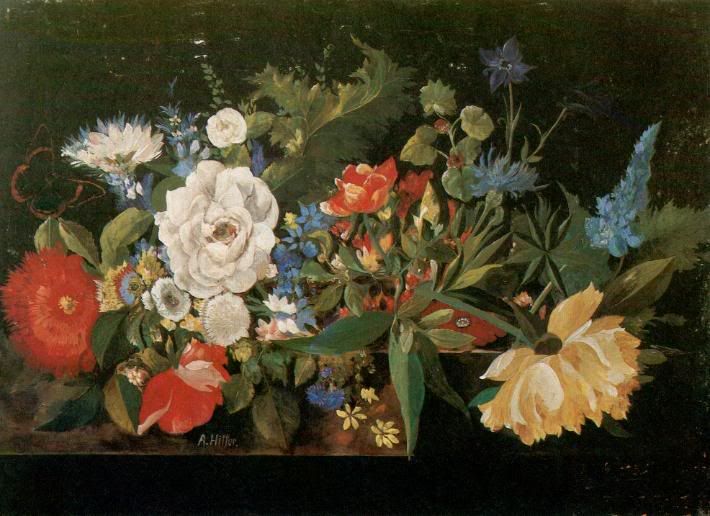
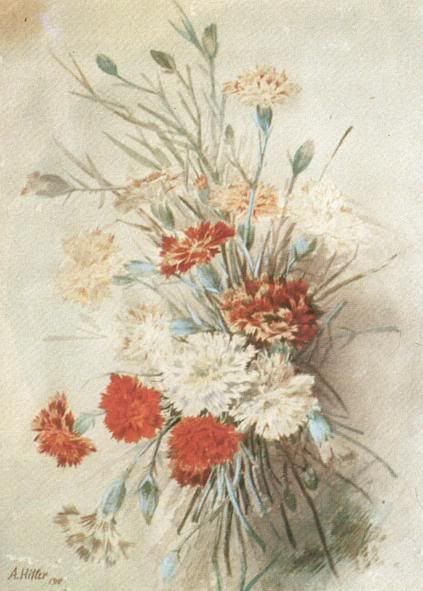
He was not only a man who managed to lead the world to distructive war and chased jews to finish them up........ i might not support his ideas though but i really respict his intelligence wheather he used it for good or bad deeds... but nobody can deny that he was a genuis who managed to evolve from a zero to a hero... he was a very poor guye who managed to rule the country and convince the who nation with what he believed in...... and he even fought the world for ir....... nobody knows for sure how he mnaged to do this....... some say it his carisma helped him alot... but nobody knows for sure... i saw a movie once about this period of life in germany that showed how ppl griefed after the death of hitler........ the commentator said that this usually happened after dictators die cos they become like a domenant father of helpless children they get confused and feel so lost after he leaves cos theyr not used to living on their own..... well anyways regardles anything this man was talented i attached ehre some samples of his work for you to see and there s an article about it aswell..... i was really surprised to know that this man s not the devil...... devils dont paint that well " wink "


Hitler's Art

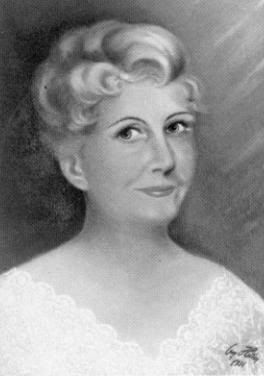
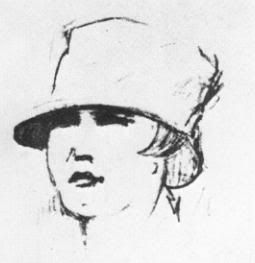
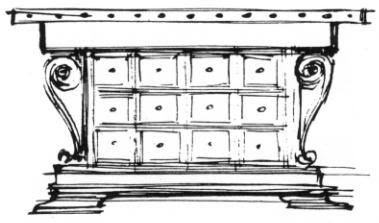
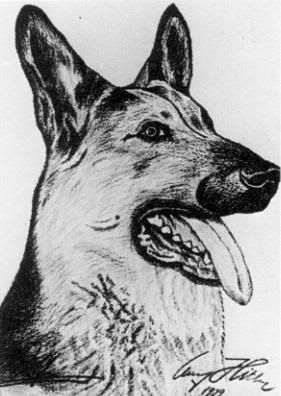
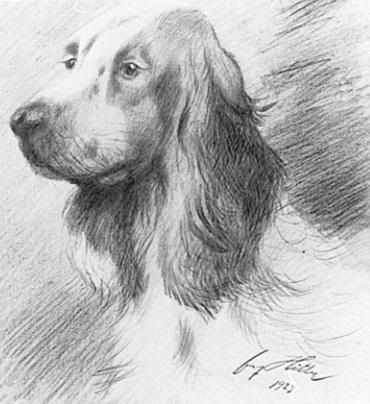
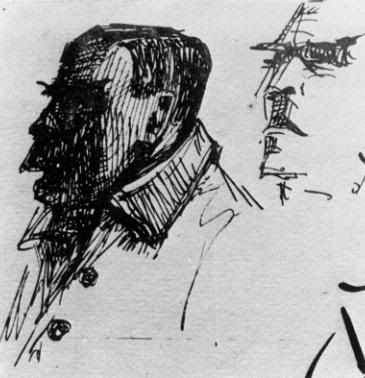
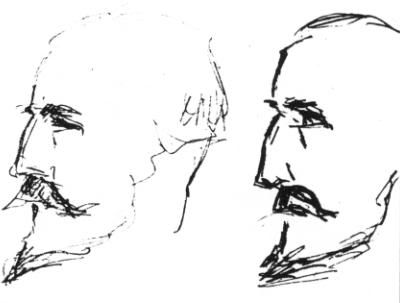
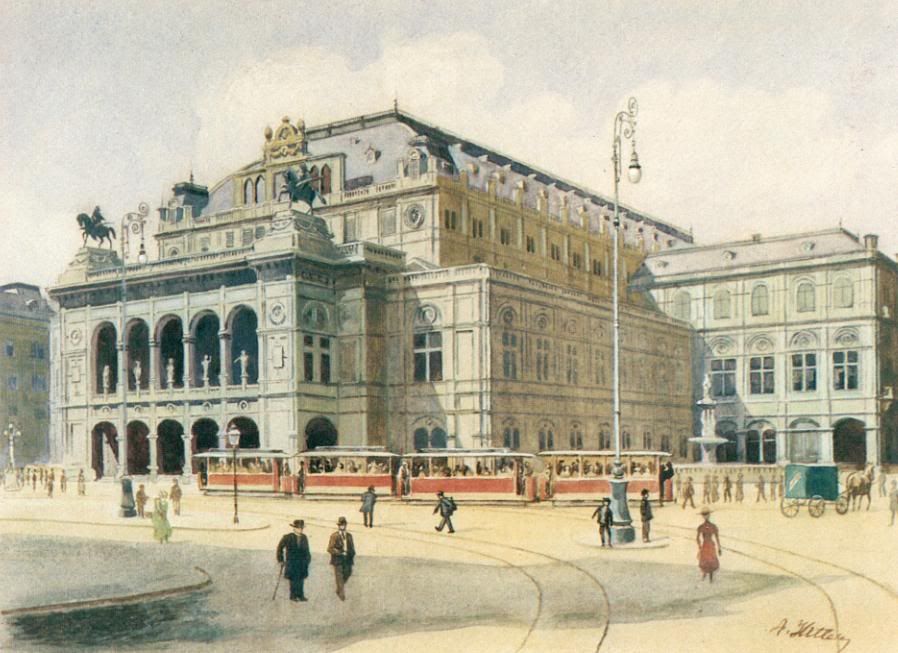
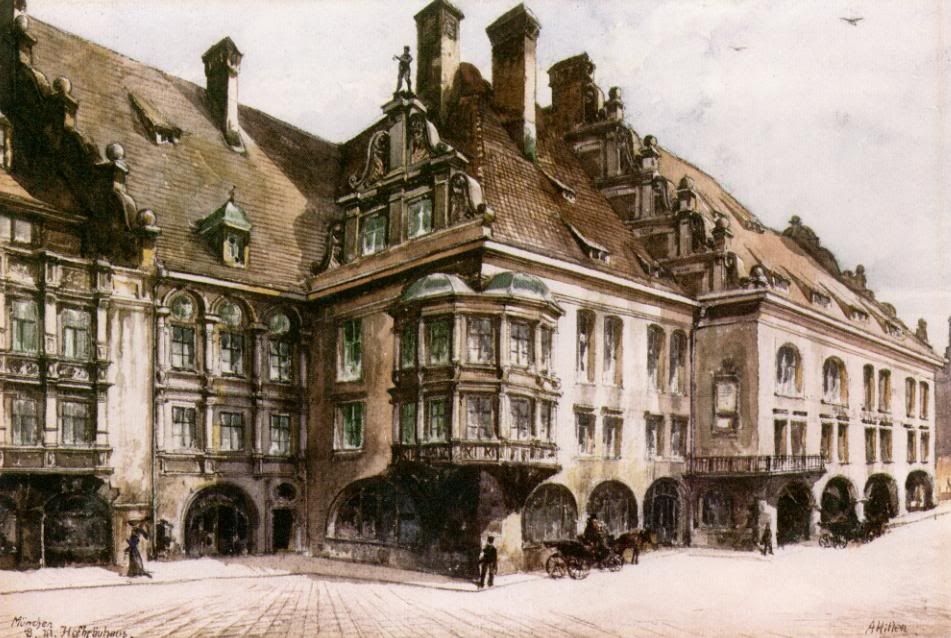
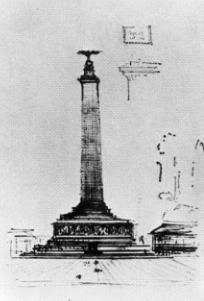
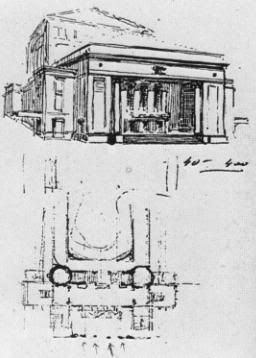
Before amassing his fortune with the enormous royalties from the publication of his hugely popular Mein Kampf, Hitler earned a living by using his artistic skills to produce paintings that were sold to the public or used for postcards. Hitler was a great student of the fine arts and studied music, opera, painting, sculpture, and architecture. While living in Vienna under conditions of poverty, he read voraciously and still managed to spend whatever meager income he had to attend lectures, concerts, opera, and the theater. Even when he barely had enough money to survive he refused to compromise and always purchased the best paints, brushes, paper, and canvas. As a remarkably prolific artist, he is estimated to have created between 2000 and 3000 drawings, watercolors, and oil paintings. His artistic talent revealed itself at an early age and continued painting and drawing throughout his life. Even while behind the front lines in World War 1, he continued to paint in his spare time and contributed instructional drawings and cartoons to the military newspaper. His art continued throughout his leadership of Germany and included detailed building plans, furniture design, city planning, and monuments. Perhaps the notion of an artist becoming a political seems strange in the current era where politics are dominated by professional politicians, it was Hitler's profound artistic vision that translated from his dreams into reality the Autobahn, Volkswagen, Rocket Science, and in the general the groundwork for a prosperous people and flourishing culture before this was lost in World War 2. Just as the ancient Greeks wrote about the unique qualifications of a philosopher to be a leader, an artist's unique perspective and instinctual drive to create something out of nothing makes the artist uniquely qualified to lead and inspire a nation. Architecture Buildings City Planning Caricatures/Doodles Dogs Flowers Furniture Landscapes Nudes Women National Socialist Art Among the most renowned artists whose style flourished during the National Socialist era were Arno Breker and Adolf Wissel. The classical style of these artists stood against the world trends in art at the time, such as cubism, surrealism, impressionism, expressionism, dadaism, and modernism in general. Rather than censor these modern styles of art, Hitler decided it was better to gather the work from trendy modern artists and provided exhibits of "degenerative art" where citizens could see for themselves what this style was about and compare it to classical art. It was labelled "degenerative art" because it suggested negativity and incomprehensibility of the world, and as such was at odds with the positivism, determined progress, noble ideals, desire for solutions, and generally hopeful outlook that the National Socialist movement stood for. Hitler believed that modern art was in conflict with the eternal values of beauty and therefore could only lead to a decline of civilization. Modern art separated people from identifying with the positive expressions of art because it was incomprehensible. In addition, modern art had obliterated the concept of beauty and consequently stood as an enemy of life itself because it preferred nothingness or the ugly to the beautiful. Now that over 80 years have passed since Hitler first formed and articulated these ideas, we are now left to judge the societal effects from modern art's inversion and destruction of beauty. While the human form in some cases remains praised for health and vigor, in other cases it is attacked with piercings, tattoos, or hair that is dyed in strange colours. Meanwhile the splendor of nature's landscapes are often destroyed in favor of poorly conceived architectural designs, though few people seem to notice. In countries like the United States, the potential monetary benefits of a strip mall take precedence over the psychological effect of bad design, crass commercialism, and the loss of a natural landscape. Contrastly, many people who life in cities with buildings that are several hundred years old and maintain architectural standards suggest that these old buildings energize and inspire the people who live there. Hitler considered the lack of architectural standards to be a serious problem. In the 19th Century our cities began to lose the character of cultural centers and became simply human settlements. When Munich was a city of 60,000, it wanted to be one of the major German centers of culture. Today nearly every industrial city claims this honor, usually without being able to show any significant accomplishments of its own. They are nothing more than collections of houses and apartment buildings. How can such an insignificant place have any appeal? No one will have particular loyalty to a city that lacks any individuality at all, that avoids anything resembling art. Even the big cities are becoming poorer in real works of art even as they increase in population. The modern era has done nothing to increase the cultural level of our big cities. All the glory and treasures of our cities are the inheritance of the past. Contrary to the belief that Hitler was uptight about things such as nudity, he allowed painters and sculptors to produce both male and female nudes. Male nudes were depicted as responsible, heroic and powerful while females were neat, clean, and full breasted while having a flat belly, long-muscled thighs, and slim shanks. They were sometimes depicted as Nordic, perhaps because many people prefer the natural beauty of Nordics, but were sometimes brunette as well. It should be noted that contrary to historical propaganda, Germany is not a Nordic nation but a predominately Alpine one, though it has a small Nordic minority, and this has been the case for several centuries. It is therefore most probable that the artists and people were praising an ideal in the depiction of their minority population rather than positing a notion of national superiority in this image.


src="http://i3.photobucket.com/albums/y70/alienzero/Hitler/architecture5.jpg">

25 Mar 2005

Che Guevara


Farewell letter from Che to Fidel Castro

« Year of Agriculture »

Havana, April 1, 1965.

Fidel:


At this moment I remember many things: when I met you in Maria Antonia's house, when you proposed I come along, all the tensions involved in the preparations. One day they came by and asked who should be notified in case of death, and the real possibility of it struck us all. Later we knew it was true, that in a revolution one wins or dies (if it is a real one). Many comrades fell along the way to victory.

Today everything has a less dramatic tone, because we are more mature, but the event repeats itself. I feel that I have fulfilled the part of my duty that tied me to the Cuban revolution in its territory, and I say farewell to you, to the comrades, to your people, who now are mine.

I formally resign my positions in the leadership of the party, my post as minister, my rank of commander, and my Cuban citizenship. Nothing legal binds me to Cuba.

The only ties are of another nature - those that cannot be broken as can appointments to posts.

Reviewing my past life, I believe I have worked with sufficient integrity and dedication to consolidate the revolutionary triumph. My only serious failing was not having had more confidence in you from the first moments in the Sierra Maestra, and not having understood quickly enough your qualities as a leader and a revolutionary.

I have lived magnificent days, and at your side I felt the pride of belonging to our people in the brilliant yet sad days of the Caribbean [Missile] crisis. Seldom has a statesman been more brilliant as you were in those days. I am also proud of having followed you without hesitation, of having identified with your way of thinking and of seeing and appraising dangers and principles.

Other nations of the world summon my modest efforts of assistance. I can do that which is denied you due to your responsibility as the head of Cuba, and the time has come for us to part.

You should know that I do so with a mixture of joy and sorrow. I leave here the purest of my hopes as a builder and the dearest of those I hold dear. And I leave a people who received me as a son. That wounds a part of my spirit. I carry to new battlefronts the faith that you taught me, the revolutionary spirit of my people, the feeling of fulfilling the most sacred of duties: to fight against imperialism wherever it may be. This is a source of strength, and more than heals the deepest of wounds.

I state once more that I free Cuba from all responsibility, except that which stems from its example. If my final hour finds me under other skies, my last thought will be of this people and especially of you. I am grateful for your teaching and your example, to which I shall try to be faithful up to the final consequences of my acts.

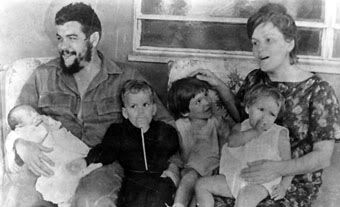
I have always been identified with the foreign policy of our revolution, and I continue to be. Wherever I am, I will feel the responsibility of being a Cuban revolutionary, and I shall behave as such. I am not sorry that I leave nothing material to my wife and children; I am happy it is that way. I ask nothing for them, as the state will provide them with enough to live on and receive an education.

I would have many things to say to you and to our people, but I feel they are unnecessary. Words cannot express what I would like them to, and there is no point in scribbling pages.


Image hosted by Photobucket.com


Quote by Guevara

"Always be capable of feeling... any injustice committed against anyone anywhere in the world."

-- Che GUEVARA, in his goodbye letter to his children


A great man

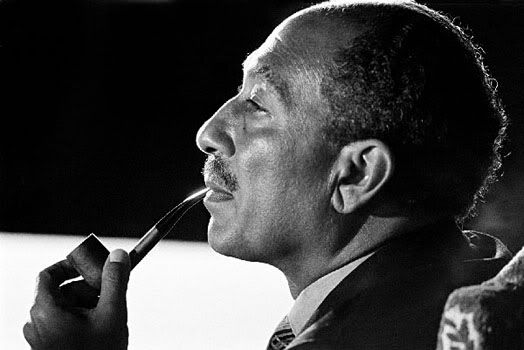
This man might not be the best man who ever ruled egypt.... but iguess we owe him alot....... atleast this man saved many young men from dieing........

this man stopped war so now all mother sleep well atnight when they have sons n the army cos they know their sons won't have to go to war........ and every man can sleep deeply cos there s no occupied inch of his land...not anymore
Image hosted by Photobucket.com

يا امايا

يا امايا سكى الباب
وتعالى خبينى
واجف الجدع عالباب
بصوته بنادينى
عنب شفايفك طب ياحلوه جاوبينى
يا اماى سكى الباب
وتعالى ضمينى
كيف ماعشج سمار الابريم
ومين يكره المسك والرياحين
هويت حفيف خطاوى النخيل
والنور اللى على جبينه

يا اماى ردى الباب
وتعالى جوليلى
زينه انا يا اماى؟
بالله لا تخزينى
ورد الخدود زهر
والا لساه غفلان
والعود لسه اخضر
والا اوانه حان؟
يا اماى افتحى الباب
وتعالى طمنينى
واجف لساه عالباب
والا راح وسلينى؟
والله انا عشجاه وبنظره يحينى
كلامه زين يا اماى
وصوته كيف الناى
حزين بيشجينى
طب اعمل ايه يا اماى
فى رمش سارجنى
وجلب عاشجنى
معجول ارده حزين؟
يا يوما ردى عليه
جوليله ياجينى

كابوس


لم تعد تذكر منذ متى وهى تعدو...... ولا لماذا تعدو.... ربما تهرب.... اجل تهرب... مم تهرب؟؟!!!... انها لا تدرى... او ربما كانت تدرى.... فالاغلب انها فقد ذاكرتها خلال الطريق...... تعدو كما لو ان ذئاب جاعه تطاردها... ترى جبلا شاهق الارتفاع.. تبذل كل جهدها فى التسلق وعندما تصل الى القمه تجد الذئاب امامها....

لا تعرف كيف تهبط نحو القاع فتلقى بنفسها من حالق راغبه الموت..... تسقط على جناحى طائر مهاجر ياخدها طعاما لاولاده..... تصرخ الما عندما يطعمها لاحد افراخه الجياع.... يبتلعها تماما... يحيط بها الظلام من كل جانب.... لكنها لا تشعر بالخوف... ربما ذكرتها ضربات قلب الطائر الصغير كما لو كانت فى رحم امها من جديد....تولد ثانيه يغطيها دم المخاض.... تهدهدها امها برفق علها تنام... فهى تأبى النوم... انها تذكر الان انها منذ ولدت وهى لم تنم... ومنذ ان تعلمت المشى وهى تعدو.... لكنها لم تتذكر بعد لماذا تعدو... و لا لماذا تعدو خلفها الذئاب... والكلاب... والخفافيش... وكائنات اخرى لا تدر لها اسما.... ولم تتذكر ايضا لماذا لا تنام.... لكنها تذكر اها يجب ان تعدو.. فهى منذ ان ولدت وهى تعدو.... فى البدء كانت الكلمه... والكلمه هى انها يجب ان تعدو.... يجب ان تهرب... تتعب من كثرت ما عدت.. تتوقف فى لحظه سكون لالتقاط انفاسها... تتجلى لها فى الظلمات عينان.. وابتسامه... تقترب منهما لترى فارسا على ظهر جواد ادهم اغر.... تقترب منه... يرفعها خلفه على حصانه.... ولكنها حالما تتذكر ثانيه الذئاب... الكلاب... والخفافيش...والكائنات التى لا تدر لها اسما... وانها يجب ان تعدو.....تنظر اليه بعينين ملؤهما الدموع... تود لو انه يقتل تلك الوحوش التى تطاردها.. لكنه لا يراها وهى لا تستطيع ان تتكلم.. فهى لم تتعلم ان تتكلم... فقط تعلمت ان تعدو..... همت بالرحيل فأبى ان يتركها.. غرست سكينا فى صدره واخذت تعدو... لكنها الان تعلم لم تعدو...... ليس هربا من الذئاب ولا الكلاب ولا الكائنات التى لا تدر لها اسما... انها تعدو الان هربا من تلك العينين الحانيتين... والابتسامه العذبه. والدماء التى تغطى كفيها.... اثارت الدماء رائحه الذئاب.... فعادت تعدو خلفها اكثر توحشا وضراوه

Murder


she stares at her face in the mirror.... wondering how could this face hide such terrible feelings behind it........ she looks deeper in her own eyes hoping to see a slight evidence of the fear that's been growing inside her..... growing like a monster eating her inside out...... her eyes are tired.... black shadowed.... she doesnt sleep well she knows..... she kept lookin herself in the eye.... she though she saw something..... moving on her eyeballs....... it is him... he woke up streaching out his body after a short night sleep....

just like the day befor... he grew more..... it is becoming so huge... too huge that she cannot bear inside.... she has got to let it out..... got dressed and hurried out.... she doesn't want to see him anymore..... she had to face it...... she went right to him.... she can't bare this any longer...... rushing into the streets like a blast of wind..... finally she is there.... barely catching her breath..... she rang the bill. he opened with a smile. god!! what happens to her when she sees that smile.... eveyrthing inside her freezes.... she goes in a comma.... hearing nothing... only his heart beat... beating inside her..... she wanted to set herself free... she couldnt wait till he leaves... he will leave oneday she knew it... he has to... she knew she was damned... why would the heaven bless her and keep him for her?.... she thought if she could kill him she will be free for once again.... she tok a knife out of her bag... waved it at his face... he did not panic... he just stood still staring with his beautiful eyes... she felt him growing inside more than ever.... her heart was beating so fast... tears rolling downon her face... he was squeezin her heart so hard... too hard that she could not bare..... she tried to push his hand away... but she couldn't..... he stapped the knife n his heart... but he just kept on squeezing her heart till his pulse stopped....... she didnt know what happened...... she was surprised watching her own body laying on the floor and he was holding her hand weaping.... she saw blood covering her clothes...... with fear still in her eyes


Yet can not die

people live
people die
i have not lived
yet can not die
those who love me
leave with no goodbye
leave me with my tears

sufferin from my fears
leave me with my sigh
they call me princess charmin
sometimes they say a queen
but still they all always
make me want to cry
people come and go
years just pass me by
still i have not lived
and yet can not die

The Apple Blue

once there was an apple
hangin from a tree
it was a blue one
not like apples should be
then came a passanger
wondered what it would be
when he looked carefully

he knew its an apple tree
so the passanger wondered
why this one is blue
the blue apple answered
'cos i have seen the truth
you want to see it too?
so he replied yes sure i do
come and take a bite
then you can see through
then came another passanger
and tok another bite
from the apple blue
one passanger after another
they bite then see through
till the apple is finished
nothing left to do
so the tree cried
where is my apple blue?
the apple blue smiled
lady um not through
those who tok bites
havin me inside
i give them all the power
to see the beauty of you
to look inside themselves
to like what they knew
i'll always give them power
and to their kids too
i move from one to another
till the life is through

20 Mar 2005